

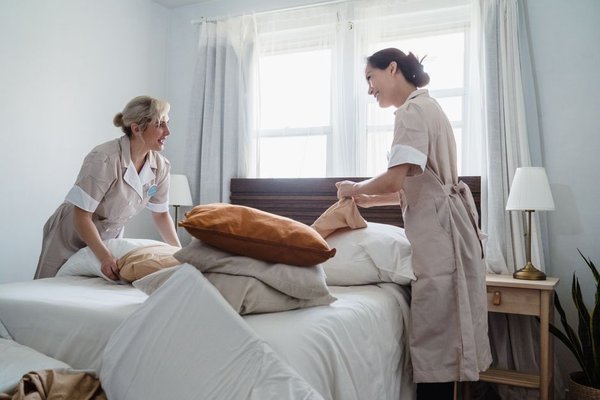
Hiring someone to clean your home, maintain the garden or look after your children can make everyday life easier. It also raises a question many homeowners overlook: if that person is injured while working for you, who pays the compensation? The answer depends partly on whether you are their employer and partly on the insurance you already hold.
Employers liability domestic staff UK rules are not identical for a directly employed nanny and a gardener running an independent business. Understanding that difference helps avoid an expensive gap in cover.
When are you an employer of domestic staff?
GOV.UK says you are usually the employer when you hire a nanny, housekeeper, cleaner or gardener directly and they are neither genuinely self-employed nor employed through an agency. Employment status depends on the actual working arrangement, not merely what someone is called on an invoice.
Signs of employment include setting regular hours, directing tasks, providing equipment, paying through payroll and expecting the individual to work personally. An independent gardener who serves several households, provides tools, quotes for jobs and can send a substitute may instead be running a business.
This matters for domestic staff insurance UK because an employee’s injury claim differs from one involving an independent contractor. Part-time work does not automatically settle the question.
Is employers’ liability insurance legally required?
Government guidance on employing someone in your home expressly lists employers’ liability insurance among a household employer’s responsibilities. Under the compulsory insurance framework in Great Britain, employers who are required to insure must generally obtain at least £5 million of cover from an authorised insurer; many policies provide £10 million.
However, not everyone working at your property is your employee. The Health and Safety Executive explains that homeowners will probably not need employers’ liability insurance for cleaners or gardeners working independently for several customers, although someone working solely for you may be different. Specific exemptions also exist, including certain close-family employment arrangements.
Ordinary domestic servants employed directly in a private household are generally outside the Health and Safety at Work Act’s scope. That separate exemption does not itself establish whether employers’ liability insurance is required.
If an employer legally required to hold compulsory cover fails to do so, the potential fine in Great Britain is up to £2,500 for each uninsured day. Northern Ireland has its own arrangements, so homeowners there should confirm local requirements.
How the rules apply to cleaners, gardeners and nannies
A cleaner visiting once a week
A self-employed cleaner who manages their own business will normally arrange suitable business insurance. But a cleaner employed directly on regular hours, under your control, may create household employee cover obligations. Payment in cash or describing the cleaner as freelance does not automatically change their status.
A gardener maintaining your grounds
Visits from an established gardening business differ from hiring a gardener as an employee. Ask whether the contractor has public liability cover and, if they employ assistants, appropriate employers’ liability cover. Check your own policy for potential liabilities involving their work.
A nanny working for your family
The nanny insurance requirement deserves particular attention because families often set a nanny’s hours and duties. A directly hired nanny is commonly an employee. Before the first working day, verify employers’ liability protection and address payroll, employment terms and other obligations. A nanny supplied and employed by an agency may instead be covered under the agency’s arrangements.
Will ordinary home insurance cover domestic employees?
Some UK buildings or contents policies include liability to domestic employees, sometimes with a multi-million-pound limit. Others restrict cover, offer an extension or exclude particular work. Never assume a general personal liability section automatically meets a legal employers’ liability obligation.
Read the wording for domestic servants, household employees and employers’ liability. Check whether cleaners, gardeners, nannies and carers are included; whether part-time and live-in staff qualify; and whether cover applies away from home. Ask the insurer to confirm in writing that your arrangement meets any compulsory insurance requirements.
If your home policy is insufficient, specialist employers’ liability cover may be needed. Compare the insurer’s authorisation, covered activities and exclusions rather than choosing solely by price.
A practical example: a fall during childcare duties
Imagine a family employs a nanny four days each week. While carrying a child downstairs, the nanny slips on a loose stair covering, suffers a serious injury and alleges the family ignored a known hazard. If the family is legally liable, compensation and legal expenses could be substantial.
The question is not whether the accident happened inside an insured house. It is whether the family’s policy covers liability to that employee for that activity. A home insurer might provide domestic employee liability protection, but the family should establish this before a claim arises.
A useful precaution is to email the insurer describing the nanny’s duties and hours, then retain its written answer with the policy schedule. Fixing the loose covering is equally sensible: insurance is no substitute for reasonable care.
Checks to make before someone starts work
First, establish who employs the worker: you, an agency or an independent business. Review buildings and contents documents for an employers’ liability or domestic employees section. Confirm the insurer’s treatment of the role and whether the cover meets any legal obligation.
Keep written insurance confirmation, the appropriate certificate where required, and an employment or service agreement. Direct employers should also check PAYE, right-to-work and employment rights obligations. Related reading includes home insurance liability cover, home insurance exclusions and insuring a home with regular paid help.
Frequently asked questions
Do I need employers’ liability insurance for a self-employed cleaner?
Usually not simply because an independent cleaning business visits your home. But status must reflect the actual arrangement. If you directly employ the cleaner, check your obligations and cover.
Does a nanny need employers’ liability cover?
Where you employ the nanny directly, GOV.UK’s household employment guidance says you should have employers’ liability insurance. Check your existing policy or arrange separate cover before employment begins.
Is public liability insurance the same thing?
No. Public liability generally concerns claims by people who are not your employees. Employers’ liability concerns injuries or illness suffered by employees because of their work. One does not automatically replace the other.
Does buildings insurance automatically include staff cover?
Not necessarily. Some home policies include domestic employee liability, but wording, limits and exclusions vary. Written confirmation from your insurer is more reliable than assumptions.
The sensible next step
The biggest risk is mistaking a familiar working arrangement for an informal one without legal consequences. Identify who employs the cleaner, gardener or nanny, then check the precise protection in place. A conversation with your insurer or a qualified broker before work begins can prevent a costly misunderstanding.